04-6-2026 |

Capitol Update
Senate Republicans released their budget targets this week, proposing a 1.2 percent increase for FY 2027 over the current FY 2026 budget. Fiscal year 2027 will mark the second full year under the state’s 3.8 percent flat income tax. The Senate Republican proposal sets a budget target of $9.623 billion, $47 million less than the amount proposed by Kim Reynolds for FY 2027. The proposed budget includes nearly $100 million in new funding for K–12 education approved earlier this session and reflects a total increase of $114 million in new spending for the next fiscal year.
Under this framework, the state is projected to maintain a combined balance of approximately $4.8 billion across the ending balance, the Taxpayer Relief Fund, and the rainy day funds at the close of FY 2027. This budget plan now sets the stage for negotiations with the House and the Governor in the coming weeks.
Three bills central to the Senate Republican budget advanced out of subcommittees on Wednesday, marking a key procedural step forward as budget negotiations intensify. Senate Study Bill 3191 funds areas of education outside of K-12, including the Department of Education and the Board of Regents. This proposal drew discussion around funding levels for Iowa’s public universities and oversight priorities within the department. Meanwhile, Senate Study Bill 3184 (justice systems budget) and Senate Study Bill 3185 (judicial branch budget) also advanced.
That momentum continued in the Senate Appropriations Committee later in the week where two additional budget bills moved forward. Senate Study Bill 3186, the transportation budget, advanced with continued emphasis on infrastructure maintenance and transit funding. The committee also approved Senate Study Bill 3189, which funds administration and regulation budgets, including key agencies such as the Department of Administrative Services and the Department of Revenue. While this week’s activity signals progress, the bills are expected to remain part of broader negotiations as lawmakers work with the House to finalize overall spending targets.
In addition to ongoing budget-related activity, the Senate advanced 23 bills this week, while the House debated and passed 19. Among them, Senate File 378 would increase the state’s default speed limit from 55 to 60 miles per hour on roads without posted limits, excluding interstates and four-lane highways, and would allow local and state transportation agencies to use temporary overlays or stickers on existing speed limit signs until permanent replacements are installed.
The legislation preserves existing limits in certain areas, including the 25 mph cap in residential and school zones and the 70 mph interstate speed limit. The Senate initially passed the proposal last year; however, the House adopted amendments to align penalties with the higher limits before approving the measure on Wednesday by a 76–16 vote. Because of these changes, the bill must return to the Senate for approval before it can be sent to Governor Reynolds for signature.
Scene on the Hill
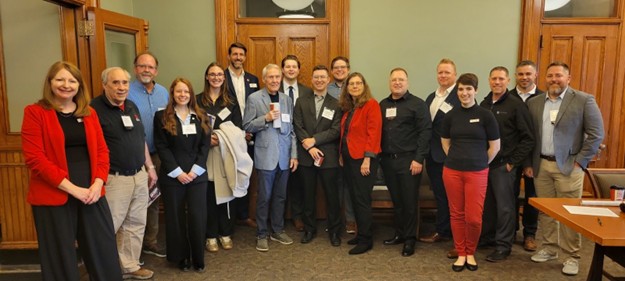
March 31, 2026: Members of the Iowa Chapter of the American Institute of Architects gathered for their annual legislative breakfast before heading to the Capitol rotunda to continue their advocacy efforts